




CASE STUDY
The Power of Free Virtual Primary Care
How removing cost barriers drives virtual care utilization.
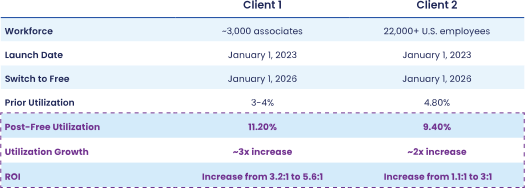
For self-insured employers, a virtual care benefit only delivers value when employees use it. Two CirrusMD clients struggled with low utilization after launching the platform in 2023. By removing employee copays, extending free access to dependents and supporting the change with targeted communications, both organizations significantly increased utilization and improved ROI. Even modest copays can discourage employees, particularly hourly, deskless and dispersed workers, from seeking care.
CirrusMD’s free-to-employee model removes that barrier, helping employers drive greater utilization and ROI.
Client 1
This client owns and manages more than 300 apartment communities with approximately 3,000 associates across the U.S. A two-time USA Today Top Workplace honoree, they are guided by their purpose of creating a better way to live.
The Challenge: With associates spread across hundreds of properties, traditional telehealth wasn’t a good fit. Although CirrusMD eliminated scheduling barriers, utilization remained at just 3% to 4%. By late 2025, the client was considering leaving the platform.
The Solution: CirrusMD recommended transitioning to its no-copay model for employees and dependents. The client paired the change with a targeted communications campaign to build awareness and drive adoption.
The Results: Utilization tripled, surpassing CirrusMD’s 10% benchmark. Thousands of employees and dependents established an active care relationship, helping reduce unnecessary ER and urgent care visits.
Client 2
This client is a leading pest control and hygiene services company with more than 22,000 U.S. associates. Supporting employee health is an important part of its commitment to protecting people and enhancing lives.
The Challenge: Field technicians spend their days traveling between job sites with limited time to seek care. Despite a strong platform, utilization remained at 4.8%. Even a modest copay was enough to discourage adoption across this large, mobile workforce.
The Solution: The client transitioned to CirrusMD’s free-to-employee model for associates and dependents and supported the rollout with a multichannel communications campaign tailored to field employees.
The Results: Utilization nearly doubled, resulting in thousands of additional care encounters and fewer high-cost emergency room and urgent care visits. The increase in engagement improved ROI while supporting better population health and employee wellbeing.
Why It Worked
CirrusMD’s unique model—focusing on utilization and patient experience — was a key differentiator. Following a rigorous selection process, CHG chose CirrusMD for its ability to deliver:

Remove the Cost Barrier
Even modest copays can discourage care. Removing out-of-pocket costs helped drive adoption.

Match the Platform to the Workforce
A chat-first model with no scheduling fit the needs of busy, mobile employees.

Communicate Clearly and Repeatedly
Multichannel communications reinforced a simple message: the benefit is 100% free.

Include Dependents
Free access for dependents expanded utilization and reinforced the benefit’s value at home.

Employee copays may reduce upfront costs, but they can also limit utilization and ROI. These two organizations showed that removing financial barriers, paired with targeted communications and a care model designed for busy employees, can significantly increase virtual care adoption and deliver stronger financial returns.